FLEX / SEMICONDUCTOR
半导体设备高柔电缆如何选型:先定义这五类输入
How to Define a High-Flex Cable for Semiconductor Equipment
在选择高柔扁平、混合圆形、无拖链或超洁净电缆前,用五类工程输入澄清运动、信号、洁净、布线和验证要求。
中文工程指南
先区分运动方式,不要只写“高柔”
往复弯折、滚动弯折、扭转、机器人复合运动和静态小半径布线,对导体绞合、芯线排列、护套与应力释放的要求并不相同。选型输入应写明运动轨迹、有效弯曲长度、最小弯曲半径、速度、加速度、行程与预期循环次数。
- 固定弯曲轴还是持续变化的三维路径
- 电缆是否与其他管线共用拖链或线槽
- 端部是否承受拉力、扭矩或反复摆动
- 失效判据是断路、阻抗漂移、串扰变化还是外观损伤
把信号、供电和接地作为一个系统
协议名称只是起点。还需要给出速率、阻抗、允许损耗、长度、芯数、电流、屏蔽接地方式和连接器。混合电缆尤其要说明高速信号与动力线的相对位置、开关频率和允许串扰,避免机械寿命满足而系统通信不稳定。
洁净、真空与材料边界要单独列出
洁净室等级、颗粒控制、真空逸气、温度、湿度、化学品和阻燃要求会直接改变护套与内部材料选择。动态线缆和静态超洁净线缆不应仅凭外观或“洁净”标签互相替代。
先用设备空间决定结构方向
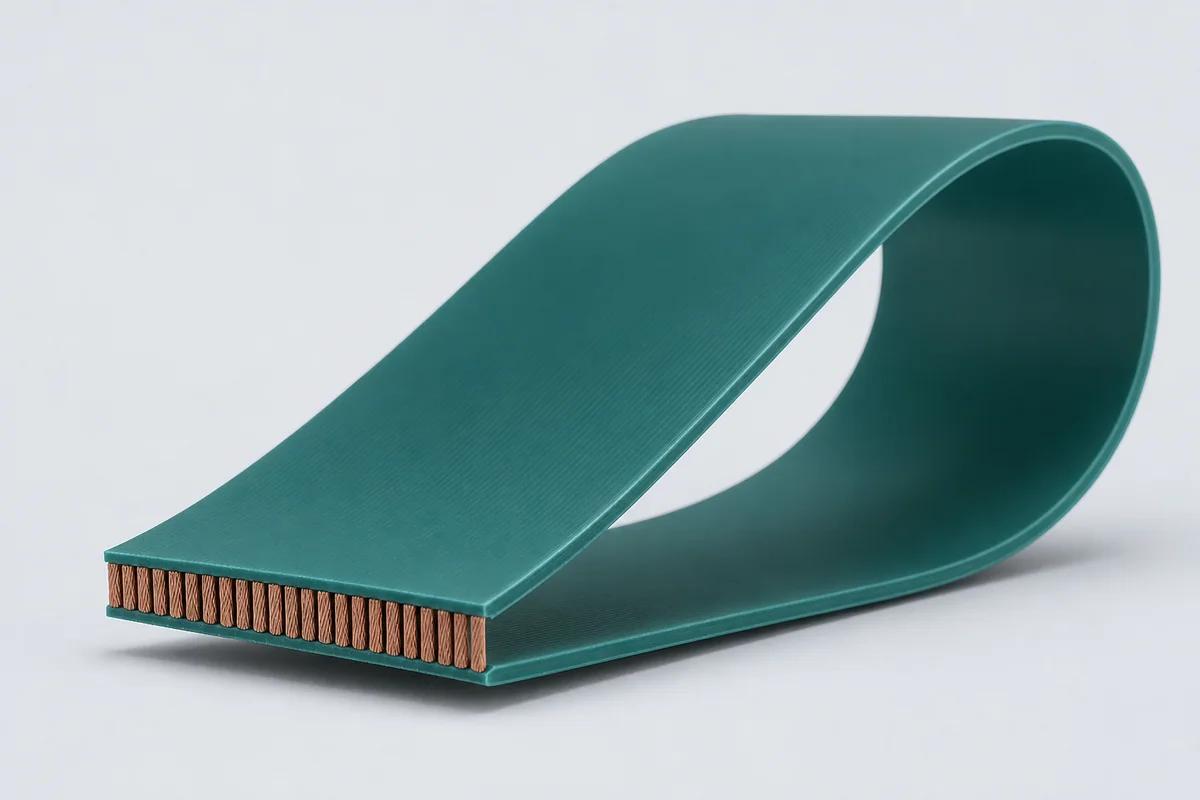
扁平结构便于约束弯曲方向并降低叠层高度;圆形混合结构便于汇集信号、供电与气路;无拖链方向可减少传统拖链占用,但必须按真实轨迹确认支撑和应力分布。结构选择应由设备空间、安装工艺与维修方式共同决定。
把验证条件写进需求,而不是最后再补
若能提供设备布局图、运动视频、接口表和验证目标,工程沟通通常会比只提供一个产品名称更有效。
- 按实际弯曲半径、行程、速度和安装姿态搭建寿命试验
- 试验前后检查导通、电阻、阻抗、插损或串扰等关键指标
- 记录连接器固定、端部应力释放和样品温度
- 约定中间检查点与失效判据,避免只报告最终循环次数
ENGLISH ENGINEERING GUIDE
A practical engineering checklist for separating motion, signal, cleanliness, routing and validation requirements before selecting a high-flex cable.
1. Describe the motion—not just “high flex”
Rolling flex, repeated bending, torsion, robot dress-pack motion and static tight-radius routing load a cable differently. Define the motion path, active bend length, minimum bend radius, speed, acceleration, stroke and expected cycles.
- Fixed bend axis or changing three-dimensional path
- Shared carrier or guide with hoses and other cables
- Pull, torque or oscillation at either termination
- Failure criterion: continuity, impedance, crosstalk or jacket damage
2. Treat signal, power and grounding as one system
A protocol name is only a starting point. Include data rate, impedance, loss budget, length, conductor count, current, shield termination and connector. For hybrid constructions, define where high-speed pairs sit relative to switched power and what crosstalk the equipment can tolerate.
3. Separate cleanliness, vacuum and material limits
Cleanroom class, particle control, vacuum outgassing, temperature, humidity, chemical exposure and flammability can change the material system. A dynamic cable and a static ultra-clean cable should not be treated as interchangeable because they look similar.
4. Let machine space select the construction direction
Flat constructions can constrain the bend plane and reduce stack height. Hybrid round cables can combine signal and power in one routed element. Trackless directions may reduce carrier volume, but support and stress distribution still have to be checked against the actual motion path.
5. Put validation in the requirement
A layout, motion video, interface table and validation target usually create a more useful engineering conversation than a generic cable name.
- Test at the intended bend radius, stroke, speed and installation orientation
- Measure continuity and the relevant signal-integrity metrics before and after motion
- Record connector restraint, strain relief and sample temperature
- Agree inspection intervals and failure thresholds—not only a final cycle count
FROM REQUIREMENT TO VALIDATION
把真实工况变成可评估的电缆需求。
Share the motion, signal, environment, interface and validation boundaries. We will use them to discuss a suitable engineering direction—without treating general guidance as a performance guarantee.
Discuss your requirement / 提交需求