Wear & cut protection
Match construction to contact surface, load, speed and debris.
PROTECT / 05
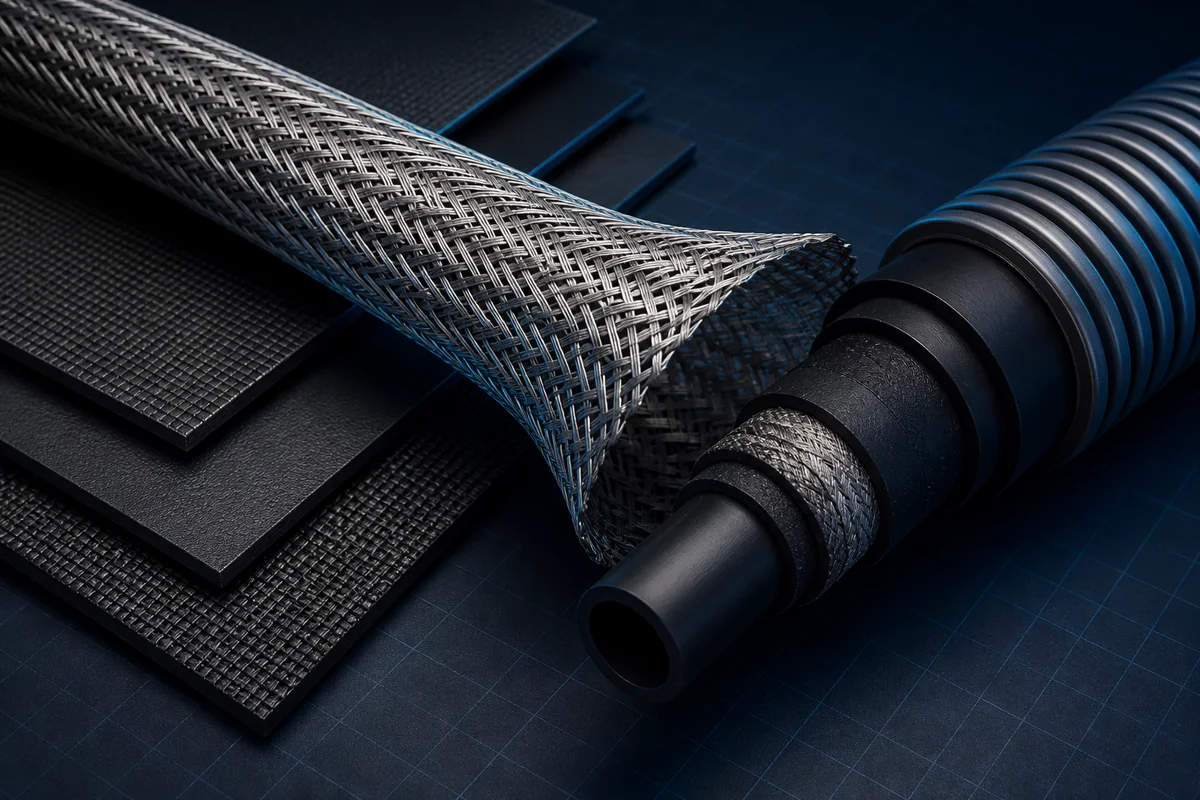
Abrasion-resistant jackets, protection systems and braids add wear, crush, cut, vibration and installation protection to existing cables and harnesses while balancing size, mass, maintenance and branching.
01 / PRODUCT OVERVIEW
This information supports product direction and early technical discussions. Yidong Telecom defines final materials, dimensions and manufacturing around the actual interface, environment and validation target.
Match construction to contact surface, load, speed and debris.
Reduce local stress at pinch points, sharp edges, branches and clamps.
Balance closure, branching, removability and assembly efficiency.
Select materials for temperature, flame, fluids, vacuum or cleanliness.
02 / PRODUCT TYPES
Each type must be further defined by protocol, length, installation and environmental conditions. A category name is not a fixed specification.
Direct or secondary jackets that reduce friction, scraping and localized damage.
View specific product ↗Tubes, sleeves, branches or composite systems for harness protection, installation and service.
View specific product ↗Fiber or metal braids providing lightweight abrasion, bundling or supplemental shielding.
View specific product ↗03 / ENGINEERING DESIGN
Confirm original diameter, temperature rating, motion and sensitive surfaces.
Optional cushioning between hard protection and the cable.
Extruded jacket, braid, conduit or composite construction.
Heat shrink, snap, wrap, tie or custom branch pieces.
Rings, strain relief or clamps prevent fray and edge wear.
04 / SELECTION & VALIDATION
Cable count and diameter range
Wear source and relative motion
Temperature, fluids, flame and cleanliness
Bend radius and mass limits
Removal, branching or field service
Supplemental shielding or grounding
Secondary protection can change harness diameter, flexibility, cooling and weight. It must be assessed together with the original cable and installation envelope.
Ready to turn a product direction into a controlled specification?
Prepare protocol, electrical, mechanical, environmental, interface and validation requirements so we can define the material, construction and sample-validation path.
Return to requirement checklist ↗